5 Signs You Need Engine Diagnostics
Sometimes a failing sensor won't instantly trip a light on your dash, but you'll notice changes in how your vehicle responds. Look out for these common warning signs:
- Difficult starting
Engine turns over excessively or stumbles to life on cold mornings. - Loss of performance and slow or sluggish acceleration
The vehicle hesitates or feels unresponsive when climbing hills or attempting to overtake safely. - Poor fuel economy
If you are getting far fewer kilometres out of your tank, a faulty air/fuel sensor is likely flooding the system with fuel. - Engine misfires, shakes, or sounds “rough”
The car shakes, vibrates or misfires while stopped at intersections. - Intermittent or occasional stalling of the engine
Your car stalls unexpectedly while stopping at intersections, or experiences brief hitches under normal acceleration.

The Fault Code Misconception
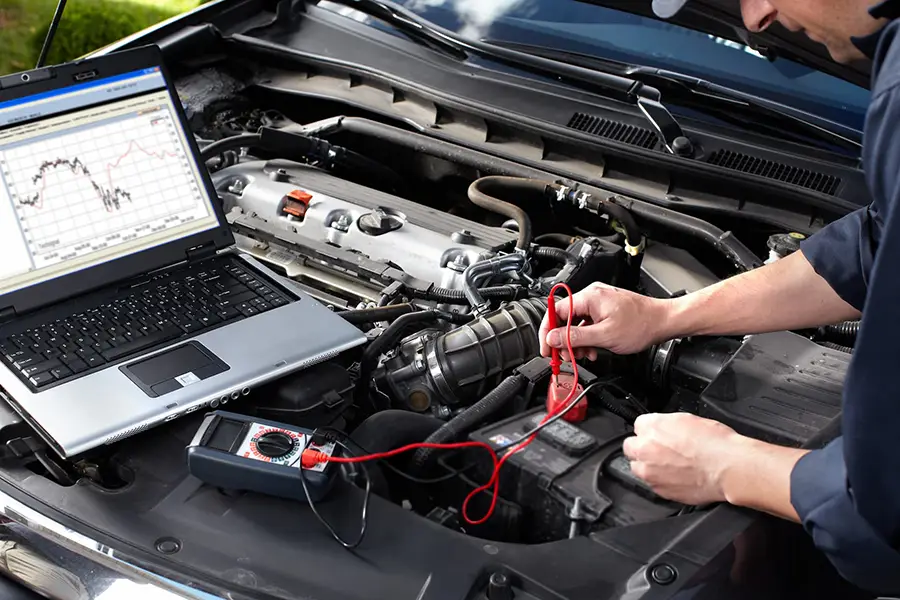
Many car owners assume that plugging in a diagnostic reader gives a direct instruction, such as "replace part X." In reality, a scan tool only provides a directional hint—it names the circuit or parameter that fell out of range.
"A code pointing to an oxygen sensor fault can often mean a vacuum line leak, a corrupted ground wire, or fuel contamination—not a bad sensor."
Our specialized MTA Master Technicians take that baseline data and complete structural line testing to isolate the genuine failure. This protects you from buying costly replacement components you don't actually need.
Why prompt diagnosis matters:
- Prevents Severe Damage: Ignoring a warning light can quickly escalate minor sensor issues into severe engine failures.
- Saves Money: Catching a small drop in fuel pressure or ignition performance early keeps repair costs low.
- WOF Readiness: Many active dashboard warning lights (like ABS or Airbags) will cause your vehicle to immediately fail its Warrant of Fitness.